Concrete cracks · Albuquerque
Why Concrete Cracks in Albuquerque and Which Cracks Need Repair
Most cracks are normal. The ones that keep widening are the ones to call about. Here is why slabs crack, what the grooves in your driveway are for, and how to tell a crack you can watch from one that needs a repair.
Free and no obligation. We answer or call back the same working day.
Why it happens
Why Concrete Cracks
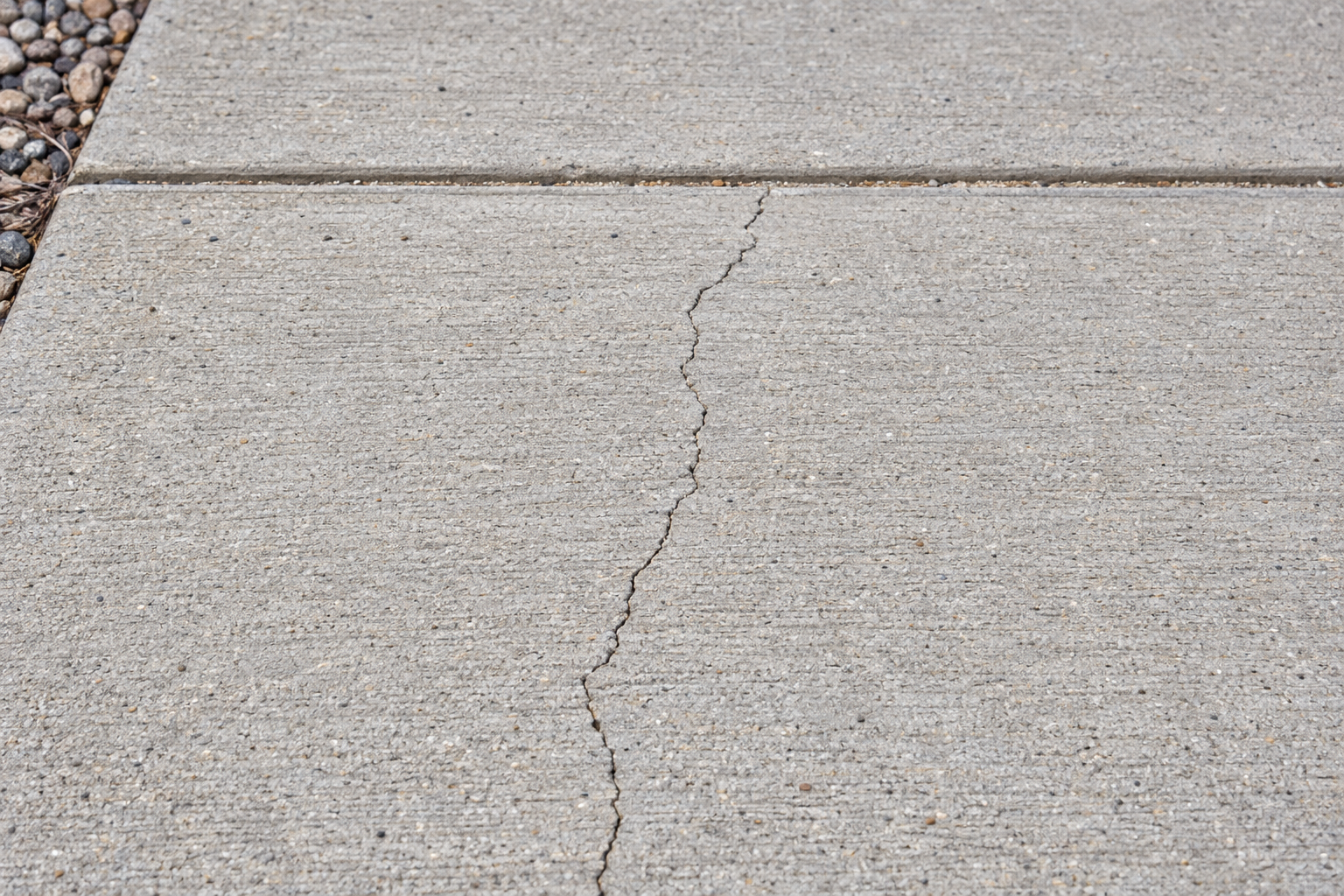
Every concrete slab cracks to some degree, because curing shrinkage, temperature changes, soil movement, water and heavy loads all put stress on it. For how concrete cures and weathers, the American Cement Association publishes the industry's guidance.
These are the six stresses we find behind most cracks we look at.
Curing shrinkage
Concrete shrinks as it cures and dries out. Water added to the mix on site weakens it and makes that shrinkage cracking worse.
Temperature swings
Heat and cold make a slab grow and shrink. Temperature extremes are one of the most common reasons concrete cracks.
Soil movement
When the ground under a slab settles or shifts, the concrete loses its support and cracks where it bends.
Water
Water that gets into concrete weakens it and causes cracking, and it keeps working at a crack once one is open.
Heavy loads
Trucks, trailers and equipment parked on a driveway or apron put weight on the "flatwork" that it may not be built for.
Mixing and curing
Concrete that is not mixed and cured properly cracks easily. Poor installation and normal wear round out the list.
The grooves in your slab
Control Joints and Shrinkage Cracks
Control joints are planned weak points, the straight grooves cut or tooled into a slab so its shrinkage cracks form at the joint instead of wandering across the open concrete. You may call them expansion joints, cut lines or just the grooves; the trade term is "control joint".
Good installers cut control joints every 8 to 10 feet. The slab is going to crack somewhere as it shrinks, and a joint gives that crack a straight line to follow, down in the groove where you will hardly see it.
When joints are missing, or cut too late, the slab picks its own lines. That is where random cracks across the middle of a driveway come from. Crack control is one of the practices the American Concrete Institute writes its standards for.
Sizing it up
Crack Widths That Point to Movement
Width is the first thing we look at: an isolated crack under a quarter inch wide is often one to seal and watch, while a wider crack tells us the soil beneath the slab has moved.
Hold a tape across your crack and match it to one of these.
-
Hairline
Normal shrinkage
A fine line you can barely catch a fingernail in. Curing and temperature put it there, and it is cosmetic. Seal it with color-matched caulk if you want it gone from view.
Watch it
-
Under a quarter inch, on its own
Seal it and watch it
One isolated crack that stays narrow can sometimes be sealed and kept an eye on. If it grows, or new cracks join it, that changes the answer.
Seal and watch
-
Needs repair
Wider than a quarter inch
Call for a look
A crack this wide indicates movement in the "sub-grade", the packed soil under the slab. Sealing the top will not stop it; the repair has to deal with what moved.
Call for a Free Estimate
The fix
Patching, Leveling or Replacing Cracked Concrete
The repair matches the damage: hairline cracks and small chips are filled with color-matched caulk or patching compound, a sunken cracked slab is lifted level, and a badly broken section is replaced.
Minor cracks are work a contractor or a capable homeowner can handle. Anything that has dropped, heaved or broken apart is a job for us.
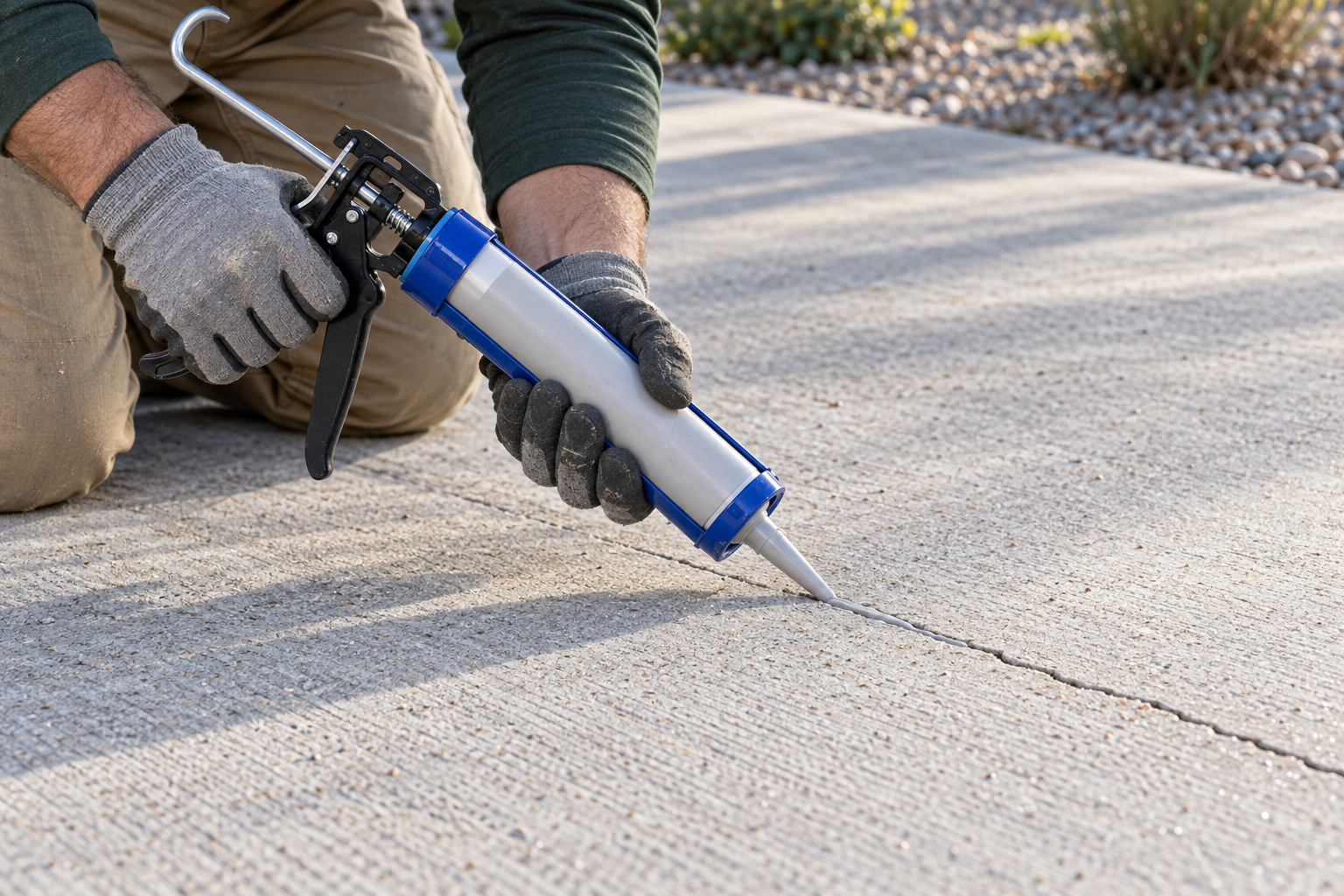
Here is how each kind of damage gets fixed.
-
Fine lines and chipped spots
Fill and seal
A filler matched to the slab closes the line and keeps water out, and the same compound evens out minor surface damage.
-
A sunken, cracked slab
Lift it level
The trade calls it "slabjacking": material pumped under the slab raises it back to grade. It needs concrete that is still in good condition.
concrete leveling that lifts sunken slabs -
Too many cracks, broken apart
Replace the section
A slab with too many cracks is past lifting. The broken section comes out and new concrete goes in its place.
Reviews
What a neighbor said
Service was excellent.Great quality concrete.Locally owned and located in Bernalillo NM. Fast and friendly service.Very satisfied with the whole service team.Thank you !!!
Our word when you call about a crack
- Free estimates. No obligation, whatever the crack turns out to be.
- Same working day. We answer the phone or call you back that day.
- The whole job quoted first. No surprise charges after we start.
- On time. We show up when we say we will.
- Clean when we leave. We clean up when the work is done.
Left alone
What Happens When Cracks Are Left Alone
A small crack left alone can grow, because water gets in, temperature changes work at it and the ground under the slab keeps moving.
Left long enough, that growth turns into this:
- Crumbling edges. The sides of the crack break down and the gap gets wider.
- Trip hazards. A raised or broken edge on a walk or driveway catches a foot.
- Pooling water. Water sits where the slab has dropped and runs into the crack.
- Sagging that keeps going. A sagging slab that is not fixed gets worse and can eventually collapse.
Are Hairline Cracks Normal?
Yes, hairline cracks are normal: curing shrinkage and temperature changes put stress on every slab, and a fine line is how that stress shows.
A hairline crack is cosmetic. Seal it if you like the look better, and call us if it starts to widen.
Call for a Free EstimateFree, no-obligation estimates. We quote the whole job before we start.
Not sure about your crack?
Free, no-obligation estimates on concrete crack repair in Albuquerque.
We quote the whole job before we start, with no surprise charges after.
Call for a Free EstimateMon to Fri, early morning to mid-afternoon
We show up when we say we will, and we clean up when the work is done.