Spalling · Albuquerque, NM
What Causes Concrete Spalling in Albuquerque and How It Is Repaired
Flaking, chipped and pitted concrete has a name: spalling. We find what caused it and fix it with a patch or a new top layer.
Free, no-obligation estimate. We answer or call back the same working day.
The short answer
What Spalling Is
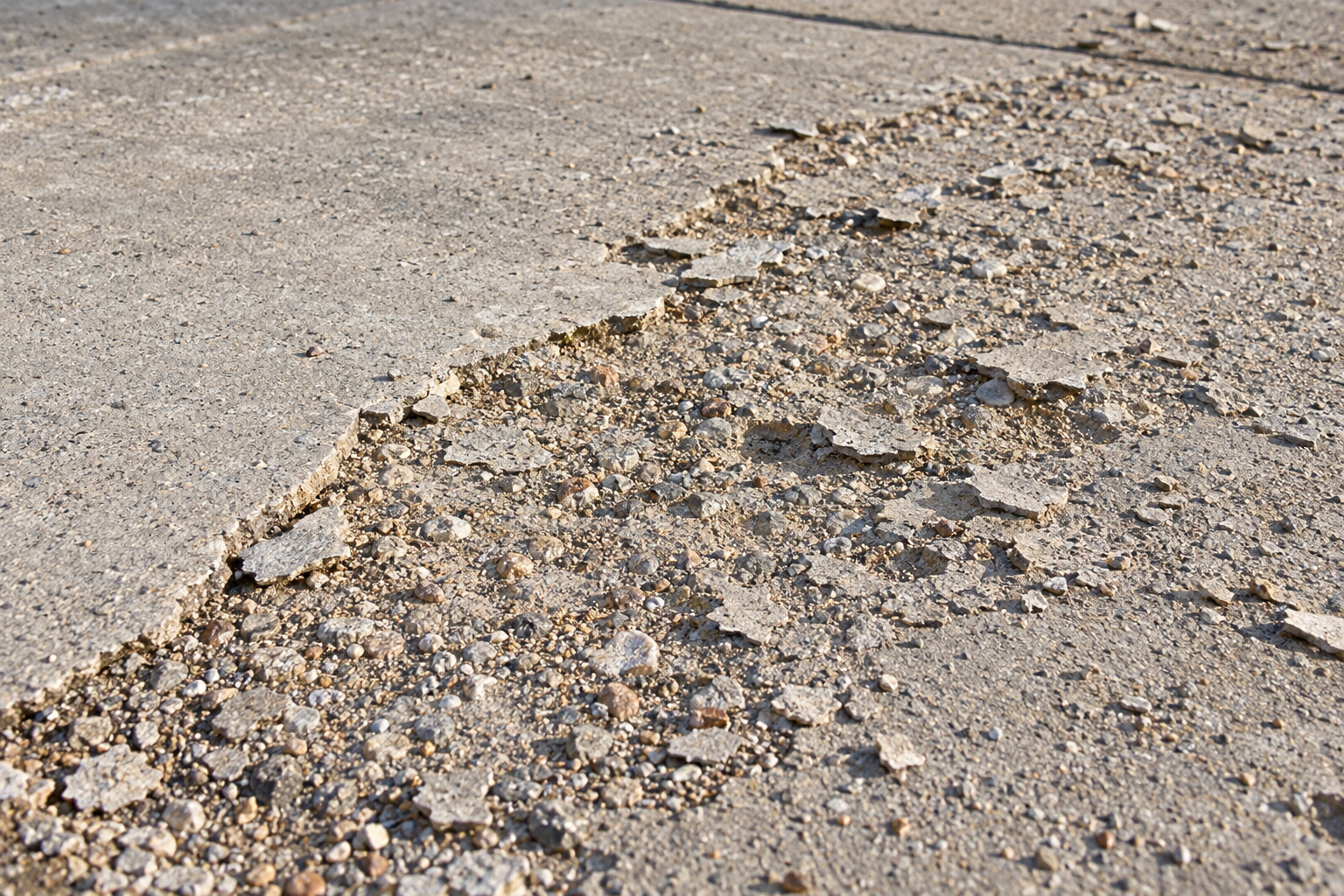
Spalling is the flaking, chipping and pitting of a concrete surface as its top layer breaks away. "Spalling" is the trade's word for what most people call flaking or pitted concrete, and the slab underneath is often still whole.
It starts with water. Moisture that gets into the pores of the concrete expands and contracts, and over time it weakens the surface until it flakes. What is left is a rough, cratered slab, often with loose chips of the old surface lying on it.
Spalling is not the same as a finish that looks like it is peeling. Peeling color is usually old sealer letting go, a "failing sealer", and that is fixed by stripping it and resealing rather than by repairing the concrete. We tell you which one you have when we come out to look.
Why it happens
Freeze-Thaw, Heat and a Weak Surface
Spalling follows when moisture in the pores freezes and expands, when the concrete was watered down or poorly cured, or when heat dried the surface too fast. Our high desert brings both ends of that: winter nights cold enough to freeze, and hot sun and dry air on pour day.
These are the common causes of spalling:
-
Weather
Freeze-thaw
A slab that stays damp through the winter takes that push again on every cold night. A single round does little; it is the repeats that loosen the top layer until it lets go.
-
The mix
Added water
Adding water to the mix on site makes it easier to place but weakens it. Concrete watered down on the truck cures out much weaker than its rated strength, and a weak top layer is the first to go.
-
The cure
Poor curing
Fresh concrete has to hold its moisture to reach design strength. When nothing holds it in, the surface never gets as strong as the slab under it.
-
Pour day
Fast drying
Heat, dry air and wind pull water out of a fresh surface before it has cured, leaving a weak skin that flakes later on.
How concrete behaves, cures and weathers is set out in industry guidance from the American Cement Association.
Patch or resurface
Patching or Resurfacing Spalled Concrete
Small spalled spots are cleaned and patched, while a widely flaking but sound slab is resurfaced with a bonded overlay. Which one you need comes down to how much of the surface is gone and whether the concrete under it is still sound.
The two repairs, side by side:
-
Best for a few spots
Patch
The loose, flaking concrete is cleaned out of each spalled spot, and the hole is filled with repair material and finished flush with the slab around it.
- Suits
- A few spalled spots on an otherwise solid slab.
- Fixes
- The damaged spots only.
- Cost
- Patching small holes is relatively cheap.
-
Renews the whole surface
Best for widespread flaking
Resurface
A new top layer, an "overlay", is bonded over the old concrete. First the surface is cleaned, ground where needed and patched, loose material is removed, and the spalled areas are repaired so the new layer has something sound to grip.
- Suits
- A structurally sound slab that looks old and worn.
- Fixes
- The whole surface, in a single new finish.
- Cost
- Far less than tearing the slab out and replacing it.
A widely flaking slab is a concrete resurfacing job, covered on our page on
resurfacing for worn driveways and patios
A new surface only works on a slab that is still sound. If yours is broken through or sunken, we tell you so at the estimate, before any work is quoted.
Stop it before it starts
Curing and Sealing That Prevent Spalling
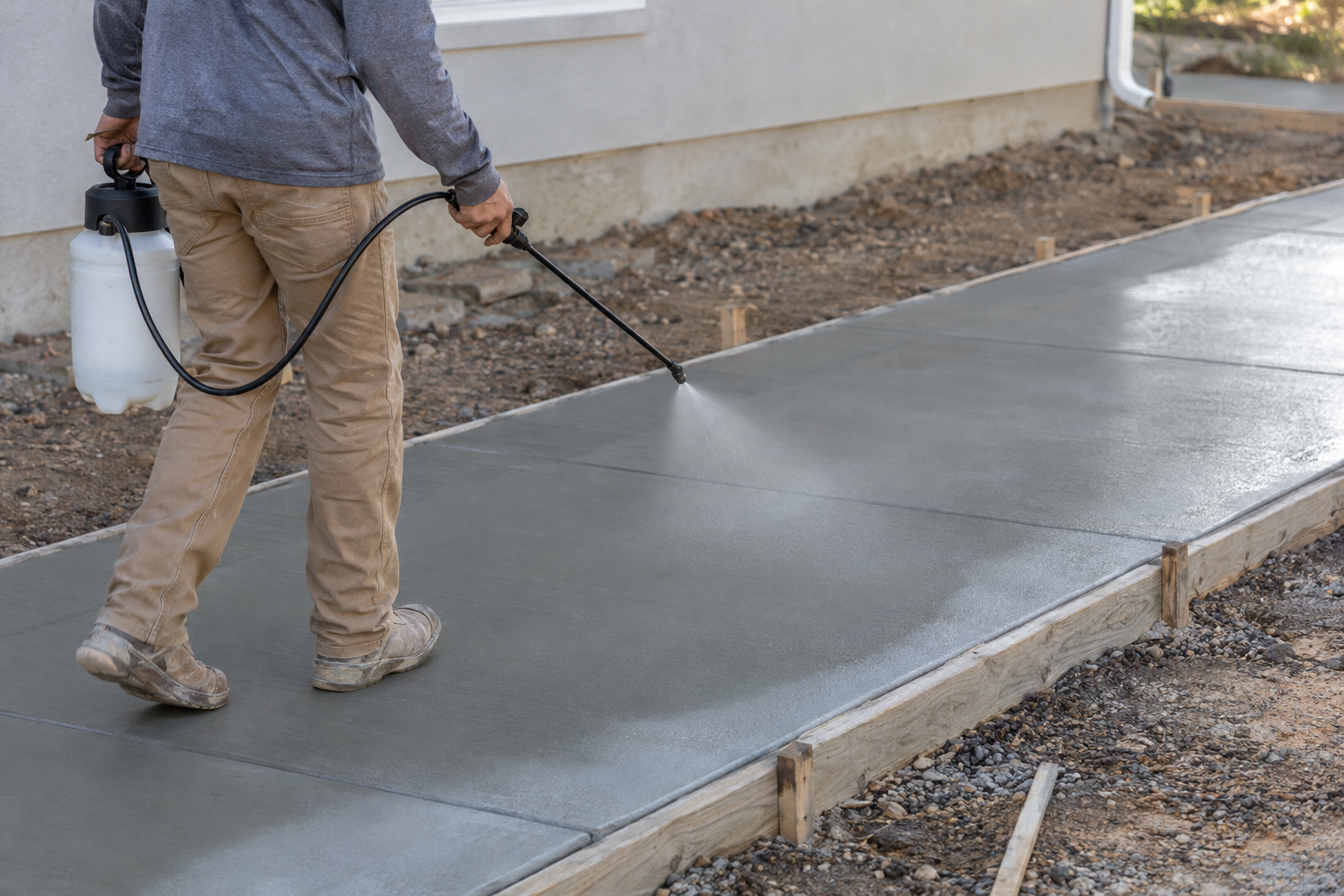
Curing compound, evaporation retardant and a cover over fresh concrete all hold in the moisture it needs, and sealer protects the surface once it has cured. Most of that protection happens in the first days after a pour.
These are the steps that protect fresh concrete from spalling:
- Curing compound. Sprayed on right after finishing, to hold in the moisture concrete needs to reach design strength.
- Evaporation retardant. Put on the fresh surface in hot, dry or windy weather to slow moisture loss.
- Plastic sheeting. Sheeting or tarps laid over fresh concrete slow the moisture loss while it cures.
- Sealer. Applied once the concrete reaches full strength, to protect the cured surface.
In hot weather, crews pour early in the morning or late in the evening to stay out of the hottest hours. Curing is one of the practices the American Concrete Institute sets standards for.
Should you wait?
How Serious Spalling Is
Spalling is mostly a surface problem at first, but it can spread as water gets in and the surface keeps breaking down. Water that gets into concrete weakens it and causes cracking, and small cracks left untreated grow with water, temperature changes and ground movement.
A few flaking spots on a sound slab are a small repair. Left through more wet and freezing seasons, the pits widen and join up, and a patch job can turn into a whole new surface.
Can Spalling Become a Trip Hazard?
Spalling can become a trip hazard once the pits deepen and the edges crumble on a walk, a step or a driveway. Cracked and uneven concrete is a trip-and-fall hazard, and crumbling edges also leave low spots where water pools.
If you can catch a toe on it, it is time to call.
Call for a Free EstimateReviews
What a Neighbor Said
A review from our Google profile, in the customer's own words, and the promises we make on every slab we look at.
Service was excellent.Great quality concrete.Locally owned and located in Bernalillo NM. Fast and friendly service.Very satisfied with the whole service team.Thank you !!!
What you can hold us to
- Free estimates. No obligation to go ahead.
- Same-day answer. We pick up or call back the same working day.
- On time. We show up when we say we will.
- Whole job quoted. No surprise charges after.
- Clean site. We clean up when the work is done.
Flaking slab? We will come look.
Free, no-obligation estimates on spalled and flaking concrete across Albuquerque.
We quote the whole job before we start, with no surprise charges after.
Call for a Free EstimateMon to Fri, early morning to mid-afternoon
We show up when we say we will, and we clean up when the work is done.